Amalienborg palace copenhagen is a cluster of four nearly identical rococo mansions arranged around an octagonal cobblestone square, and it is still the working home of the Danish royal family rather than a retired historic building. One wing operates as a museum you can pay to enter, while the square itself and the daily guard ceremony are free to watch. My honest take: most visitors overcomplicate a stop that really only needs an hour, or a good look from a passing boat.
What Is Amalienborg Palace?
Amalienborg is a complex of four matching eighteenth century mansions built around a central square, commissioned originally for four noble families before the Danish crown took over the site after a fire destroyed the earlier royal residence, Christiansborg, in 1794. I would not expect a single grand palace building the way Versailles or Buckingham Palace present themselves, Amalienborg’s whole character comes from the symmetry of four separate buildings facing each other across one open square, which is a genuinely different visual experience than most people picture before arriving.
What Are the Four Palace Buildings?
The four mansions each carry their own name and history: Christian VII’s Palace, Christian VIII’s Palace, Frederik VIII’s Palace and Christian IX’s Palace. Some serve as the working residences of the current royal family, while Christian VIII’s Palace houses the public museum. I would not try to memorize which building is which before visiting, the square works fine as a whole even if you cannot immediately place each name, and information panels around the square explain the layout better than trying to hold it all in your head beforehand.
Is Amalienborg Still a Working Royal Residence?
Yes, and this is what genuinely sets it apart from a lot of European royal sites that have been fully converted into museums. Members of the Danish royal family live at Amalienborg for much of the year, and the presence of the royal guard, the raised flag when the monarch is in residence and the closed doors on most of the buildings all reflect that this is a lived in home, not a preserved relic. I would keep that in mind while you are on the square, it changes how I think about the space, less like touring a museum exhibit and more like standing just outside someone’s actual front door.
Can You Go Inside Amalienborg Palace?
Partially. Christian VIII’s Palace operates as the Amalienborg Museum, open to paying visitors, while the other three buildings remain private royal residences closed to the public entirely. I would not expect to see the working royal apartments themselves, what the museum actually shows are historical study rooms and royal memorabilia rather than the family’s current living quarters, which stay firmly off limits regardless of the ticket you buy.
What Does the Amalienborg Museum Actually Show You?
The Amalienborg Museum recreates a set of study rooms belonging to past Danish monarchs, filled with original furniture, decorations and personal items, alongside exhibits on royal history and ceremonial dress. I would go in expecting a focused, fairly compact museum rather than a sprawling palace tour, it rewards visitors genuinely interested in Danish royal history more than casual sightseers looking to fill an afternoon, and a determined visitor can cover the whole thing well within an hour.
Is Amalienborg Palace Free to Visit?
The square itself, the exterior of all four buildings and the daily changing of the guard cost nothing to see, and this is genuinely enough for most visitors on a normal city trip. Only the museum inside Christian VIII’s Palace charges an entry fee, and specific pricing shifts periodically, so I would check the official site for the current entry ticket price before you go rather than relying on a number that might already be out of date by the time you read this. For a quick photo stop and a look at the guard, you will not spend a single krone.
Where Is Amalienborg Palace Located?
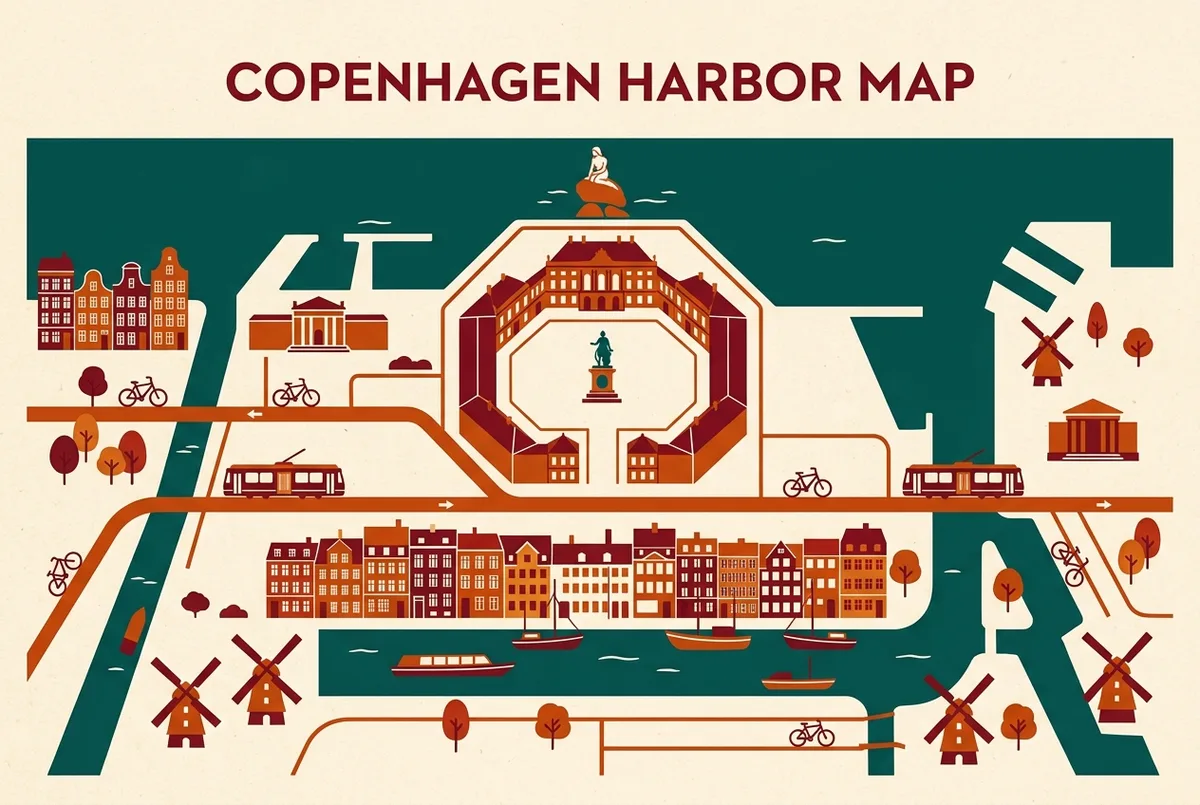
Amalienborg sits on Copenhagen’s harbor front, a short walk from Nyhavn and roughly fifteen to twenty minutes on foot from the Little Mermaid statue along the same waterfront stretch. I would use it as a natural midpoint if you are already planning to walk between Nyhavn and the statue, since Amalienborg sits almost exactly on that route rather than requiring a detour. My guide to the Little Mermaid statue covers that connection in more detail if you are stringing both stops into one walk.
How Do You Get to Amalienborg Palace?
On foot from central Copenhagen or Nyhavn, it is a flat, well signposted walk of ten to fifteen minutes along the harbor. Several city bus routes stop within a short walk of the square as well, and Kongens Nytorv metro station sits close enough for an easy final stretch on foot. I would honestly recommend arriving by canal tour if you are already booking one for the rest of the harbor, since most classic routes sail directly past Amalienborg’s waterfront side and give you a clear view of the square from the water without a dedicated walk at all.
What Is the Changing of the Guard at Amalienborg?
A daily ceremony where the Royal Life Guard marches to the square, typically around midday, to relieve the guards on duty, complete with a marching band on days the monarch is in residence. I would arrive at least fifteen to twenty minutes ahead of the scheduled time if you want a decent viewing spot, since the crowd around the square builds quickly in the run up to the ceremony, especially in summer. My full changing of the guard guide covers exact timing, where to stand and when the ceremony gets cancelled.
How Long Should You Spend at Amalienborg?
Thirty minutes covers the square, the guard and a walk around the exterior if you are skipping the museum, while the museum itself adds close to an hour on top of that. I would not plan more than ninety minutes here total even with the museum included, it is a genuinely compact site, and stretching the visit further usually just means standing around rather than seeing anything new.
Is Amalienborg Worth Visiting?
Yes, at least for the free part. The square, the architecture and the changing of the guard deliver real value for zero cost and relatively little time, which makes Amalienborg an easy addition to almost any Copenhagen itinerary. I would only pay for the museum entry if Danish royal history specifically interests you, casual sightseers get most of what they came for just standing in the square, and I would not feel short changed skipping the paid museum on a first visit.
What Is the History Behind Amalienborg Square?
The site actually carried a different palace before Amalienborg, a grand building called Sophie Amalienborg that burned down in the seventeenth century and left the ground empty for decades. The current four mansions rose in the 1750s for noble families, and the royal family only moved in after Christiansborg Palace burned in 1794, turning what began as private aristocratic homes into the seat of the monarchy almost by accident. I would find that backstory genuinely more interesting than most palace histories I have read, the royal family ending up here was a matter of necessity after a fire rather than a grand plan, which gives the square a slightly different feel once you know it.
Is Amalienborg Palace Accessible for Visitors With Mobility Needs?
The square itself is flat cobblestone, manageable for wheelchairs and strollers with some care on the uneven surface, and the museum inside Christian VIII’s Palace generally offers step free access to its main exhibition areas. I would still confirm accessibility details on the official museum site before a dedicated visit, since specific route access inside a centuries old building can vary by room in ways a general statement does not fully capture, and a quick check beforehand avoids an unpleasant surprise on the day.
What Time of Year Is Best to Visit Amalienborg?
Summer brings the longest days, warmer weather and the busiest crowds around the guard ceremony, while winter offers a quieter square and a genuinely different atmosphere against a gray Nordic sky. I would lean toward late spring or early autumn if you can choose, decent weather without the peak summer crush, though honestly Amalienborg works reasonably well in any season since the main draws, the architecture and the guard ceremony, hold up regardless of weather.
What’s the Difference Between Amalienborg and Christiansborg Palace?
They serve entirely different roles despite both being called royal palaces. Amalienborg is the residential palace where the royal family actually lives, while Christiansborg houses the Danish parliament, the supreme court and the monarch’s official reception rooms rather than private living quarters. I would think of Amalienborg as home and Christiansborg as office, that distinction clears up most of the confusion I see between the two names. My Christiansborg Palace guide breaks down what you can actually tour inside that building.
What About Fredensborg and Frederiksborg Castle?
These are two more royal buildings that get mixed up constantly, both with each other and with Amalienborg, largely because their names sound so similar. Fredensborg Palace is the Queen’s preferred residence north of the city and mostly closed to visitors, while Frederiksborg Castle in Hillerød is a separate museum open daily with genuinely impressive gardens. I would not confuse a Copenhagen visit with a Hillerød day trip, they involve very different travel time and require checking which building you actually mean before booking anything. My Fredensborg and Frederiksborg guide untangles exactly which is which.
Can You See Amalienborg From the Water?
Yes, and this is genuinely one of the better ways to take in the square’s full symmetry, since most classic canal tours sail close enough along the harbor front for a clear view of all four buildings without the crowd that gathers on land during the guard ceremony. I would pick the boat view if photographing the whole square matters to you, standing in the square itself only shows you the buildings immediately around you, while the water gives you a wider, more complete angle on the layout. My full canal tour guide covers which routes reliably pass close to Amalienborg.
Is Amalienborg Worth Visiting With Kids?
Reasonably well, especially for the free part. The square is open and easy for children to move around in, and the marching guard, complete with tall bearskin hats and, on the right day, a full band, tends to hold a young child’s attention better than a typical museum room does. I would prioritize the ceremony over the paid museum for a family visit, the museum’s historical study rooms genuinely reward an adult with an interest in Danish royal history more than a restless child, while the guard ceremony works for almost any age without needing much explanation.
What Should You Bring or Know Before You Go?
Comfortable shoes are all you really need, the square and the surrounding streets are flat cobblestone, easy walking in any season. A light jacket helps too, since the open square catches wind off the harbor even on a mild day. I would check the museum’s current hours before a dedicated trip, since opening times shift seasonally and there is nothing more deflating than arriving at a closed door after a walk across the city.
Are There Other Royal Sites Worth Combining With a Visit?
Copenhagen has more royal history packed into a small area than most visitors expect. Christiansborg Palace sits a short walk or a quick canal tour away and shows a completely different side of the monarchy, the political and ceremonial one rather than the residential one. Rosenborg Castle, another former royal residence turned museum, holds the crown jewels and sits a bit further inland. I would pair Amalienborg with Christiansborg on the same day if royal history genuinely interests you, they complement each other well precisely because they show such different functions, one a home and one a seat of state, standing only a short distance apart.
What Mistakes Do First-Time Visitors Make at Amalienborg?
The most common one I see is treating the museum ticket as mandatory, when the free square and guard ceremony already deliver most of what a casual visitor actually wants. A second is showing up right at the ceremony’s scheduled time rather than early, then complaining about the crowd blocking the view. I would build in the extra fifteen minutes rather than cutting it close, that single habit fixes most of the frustration I hear about from visitors who felt like they missed the good part of the ceremony. A third mistake is assuming all four buildings are open in some form, when three remain private residences regardless of what a ticket at the museum entrance suggests.
Is Amalienborg Good to Combine With the Little Mermaid Statue?
Yes, and I would actively plan them together rather than as two separate outings. The two landmarks sit roughly fifteen to twenty minutes apart on foot along the same stretch of harbor, and a single canal tour typically passes both within the same hour long cruise. I would combine them on one walk or one boat ride rather than splitting them across two different days, since the shared route means you are not doubling up on travel time for what amounts to one continuous stretch of waterfront.
Frequently Asked Questions
Is Amalienborg Palace still used by the Danish royal family?
Yes, it remains a working residence, and members of the royal family live there for much of the year, which is part of why several of the buildings stay closed to the public.
Do you need a ticket to see Amalienborg Palace?
No, the square, the exterior and the changing of the guard are free. Only entry into the Amalienborg Museum inside Christian VIII’s Palace requires a paid ticket.
How far is Amalienborg Palace from the Little Mermaid statue?
About fifteen to twenty minutes on foot along the same harbor front, which makes combining both landmarks in one outing straightforward.
Can you see Amalienborg Palace from a Copenhagen canal tour?
Yes, most classic sightseeing routes sail close enough along the harbor for a clear view of the square and its four matching buildings.
What is the difference between Amalienborg and Christiansborg Palace?
Amalienborg is the royal family’s residential palace, while Christiansborg houses the Danish parliament and the monarch’s official reception rooms rather than living quarters.
According to Wikipedia, the complex was originally built for four noble families in the 1750s before the crown took it over decades later, which explains why the four buildings still stand as separate, symmetrical mansions rather than one unified palace structure. For most visitors, the easiest way to see all four buildings at once is from the water. Compare current departures for a copenhagen boat tour that passes the palace on the homepage before you plan your route.