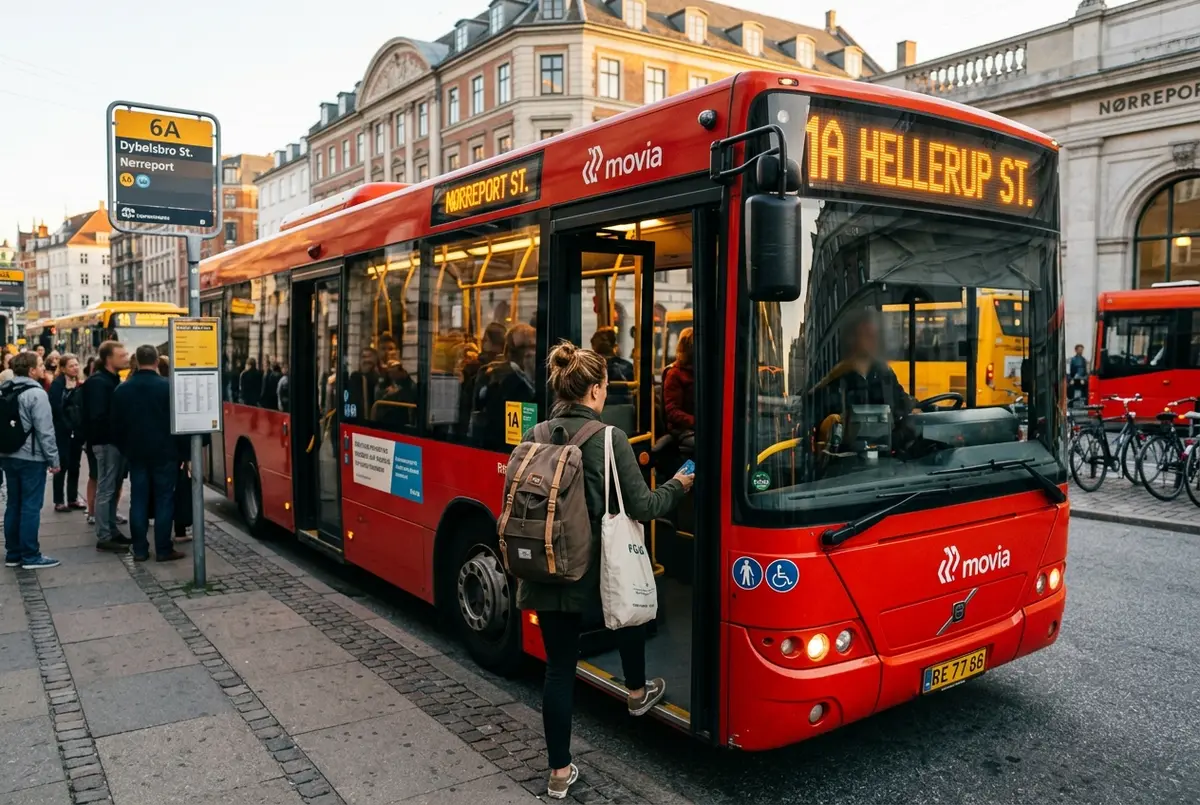
A copenhagen bus covers ground the metro and harbor boats simply do not reach, which makes it genuinely useful for certain trips and mostly unnecessary for others. Here is how I would think about it: use the bus when your destination sits off the metro map, and skip it for anything already served by the M1, M2 or a scenic boat route. The rest of this guide breaks down the routes, tickets and specific situations where each option actually wins.
How Does the Copenhagen Bus Network Work?
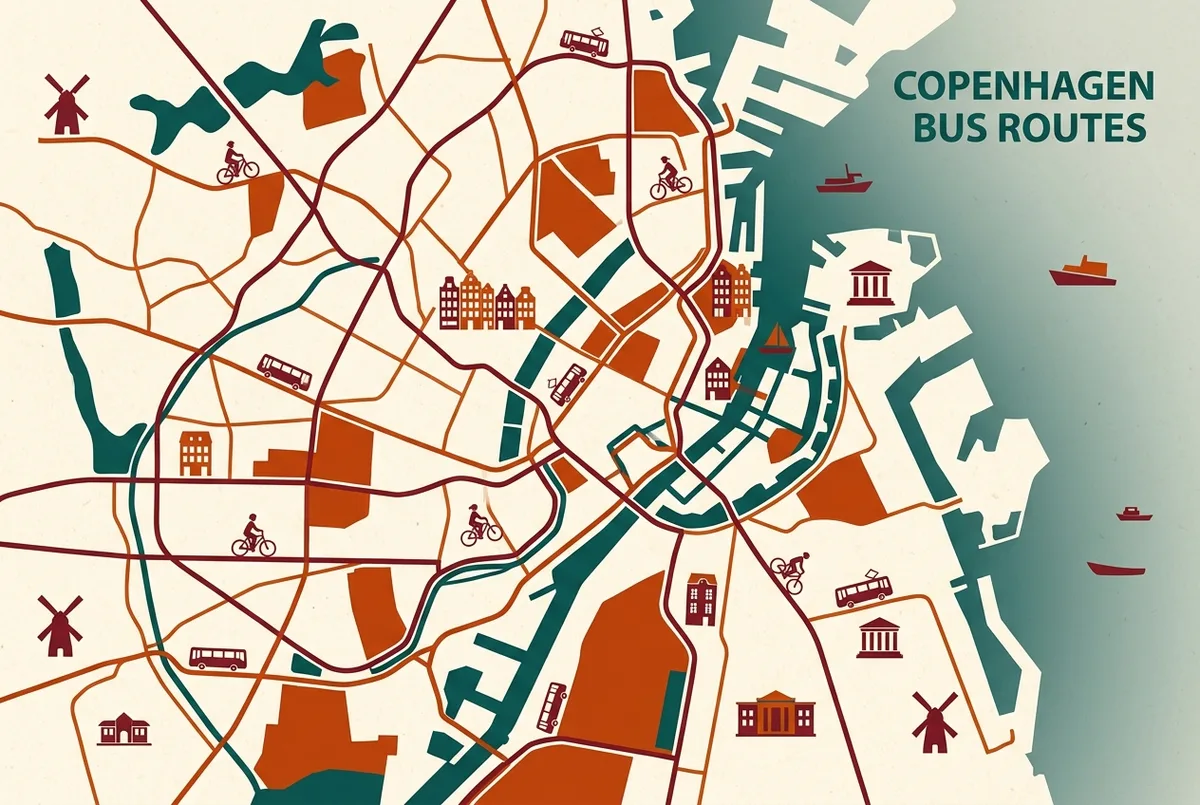
Copenhagen’s city buses run on a dense grid covering neighborhoods the metro skips entirely, with numbered routes and frequent daytime service across most of the city. I would treat the bus map as a backup layer rather than a first choice inside the historic center, since the metro and S-train handle the busiest tourist corridors faster and with less traffic exposure. My Getting Around Copenhagen pillar covers how the bus fits alongside the metro and train network as one shared ticketing system.
What Are the Most Useful Copenhagen Bus Routes for Visitors?
The A-buses, Copenhagen’s high-frequency express routes, are the ones worth knowing, since they run more often and cover more of the useful north-south and east-west corridors than the standard numbered lines. I would specifically learn the A-bus that runs closest to your hotel, since those routes are frequent enough that you rarely need to check a timetable, you can just show up and wait a few minutes. Night buses also matter if you are out past when the metro’s overnight service thins out, since Copenhagen’s night bus network fills that gap reliably.
How Do You Buy Copenhagen Bus Tickets?
Bus tickets run on the same zone-based system as the metro and S-train, so a single ticket or travel pass works across all three without needing a separate bus-only fare. I would buy through the DOT Mobilbilletter app before boarding rather than pay onboard, since app pricing is consistently cheaper and faster than dealing with cash or a card reader on a moving bus. My metro tickets and prices guide walks through the same zone pricing that applies here, and Rejseplanen, Denmark’s official journey planner, is the fastest way to check a live route across bus, metro and train together.
Copenhagen Bus vs Metro: Which Should You Take?
For most tourist-area trips, the metro wins on speed and reliability, since it runs underground with no traffic to slow it down and arrives every few minutes even at peak times. I would only pick the bus over the metro when my destination has no nearby metro stop, which happens more often in residential neighborhoods than in the areas most visitors actually spend their time. A copenhagen bus vs metro comparison really comes down to coverage: the bus wins on reach, the metro wins on speed.
When Should You Take the Harbor Bus Instead of a Regular Bus?
Copenhagen also runs a harbor bus, a public ferry that counts as part of the same transit system and crosses the water between several central stops. I would take the harbor bus over a regular city bus whenever my route runs along the waterfront, since it covers the same zones at the same fare while giving you a genuinely scenic crossing instead of sitting in street traffic. It is not the same experience as a dedicated sightseeing cruise, though, since it stops at functional docks rather than narrating the landmarks as you pass them.
Is the City Bus Good for Reaching the Airport?
Not really, no. A bus can technically get you to Copenhagen Airport, but the metro’s M2 line runs direct and considerably faster, which makes it the far more sensible option for anyone carrying luggage on a schedule. I would never choose a bus over the M2 for an airport run unless the metro is genuinely disrupted, since the time difference is large enough to matter when you have a flight to catch. My airport transfer guide breaks down exactly why the metro wins that comparison, and my taxi and Uber guide covers the door-to-door option if a bus or metro connection would not work with your luggage.
Does the Copenhagen Card Cover Bus Travel?
Yes, city buses are included in the same transit coverage as the metro and S-train under the Copenhagen Card, so you are not paying separately for bus rides once you hold one. I would only bother factoring bus coverage into the card’s value if I actually planned to use buses regularly, since the card’s real value usually comes from museum entries stacking on top of the transport savings rather than the transport alone. My is the Copenhagen Card worth it page runs the full math.
When Should You Skip the Bus Entirely?
Whenever your trip stays inside the historic core, honestly. I would skip the bus for a first-time visitor sticking to Nyhavn, Stroget, the palaces and the main museums, since walking, the metro and a harbor boat cover that entire area faster and with better views than a street-level bus ever will. A canal boat tour genuinely replaces the bus for the waterfront stretch, and it is the option I would default to for anyone spending a single day downtown.
Are There Hop-On Hop-Off Bus Options in Copenhagen?
Yes, and they run separately from the regular city bus network, operating a dedicated loop past the main tourist landmarks with the flexibility to get on and off at any stop on the route throughout the day. I would pick a hop-on hop-off bus over the regular city bus for a first-time visitor without a fixed itinerary, since the route is designed specifically around sightseeing stops rather than the practical commuter routes the standard bus network runs. Several of these combine with a canal cruise ticket, which is worth checking before buying the two separately.
How Reliable Is Copenhagen Bus Timing?
Fairly reliable, though less consistent than the metro, since buses share the road with regular traffic and can run a few minutes behind during rush hour or bad weather. I would build a small buffer into any bus-dependent plan, five to ten minutes, rather than time a connection to the exact minute, since that small cushion is usually enough to absorb normal traffic delays without turning into a missed connection. Real-time arrival information through the DOT app helps considerably here, since it shows the actual position of the next bus rather than just the scheduled time.
Do Buses Accommodate Luggage or Strollers?
Yes, most city buses have designated space near the doors for luggage, strollers and wheelchairs, and drivers generally expect passengers to use it rather than block the aisle. I would still avoid the bus with a large suitcase during rush hour if I had another option, since a packed bus at peak times gets tight even with the designated space, and a delayed connection with heavy luggage is more stressful than it needs to be. Off-peak hours or the metro tend to be the more comfortable choice when you are traveling with more than a backpack.
Do Buses Run Late at Night and Early in the Morning?
Regular daytime routes generally stop running by around 1am, after which the dedicated night bus network takes over on the busiest corridors until the first morning buses restart around 5am. I would check the night bus schedule specifically rather than assume regular route numbers keep running past midnight, since night routes use their own numbering and often follow a slightly different path than the daytime version of the same corridor. This matters most if you are heading back from an evening out well after the metro’s regular service has also thinned out for the night.
Is the Bus Useful for a Day Trip Outside the City?
Sometimes, though regional buses run separately from the city network and cover different destinations than the metro or S-train reach. I would check the S-train or regional rail option first for most day trips, since those tend to run faster and more frequently to the popular out-of-town destinations, with the regional bus network filling gaps only where rail does not go. For a trip like Copenhagen to Malmo, the train and ferry options are almost always the better choice over a bus route.
Frequently Asked Questions
Do Copenhagen buses take cash?
Some do, but paying by app or a rechargeable travel card is cheaper and faster, so I would avoid relying on cash.
Is the Copenhagen bus network safe at night?
Yes, night buses run a set schedule on the busiest corridors and are considered a normal, safe option even late in the evening.
Can I use the same ticket for bus, metro and train?
Yes, Copenhagen runs one shared zone-based ticket across bus, metro, S-train and the harbor bus.
Is the harbor bus the same as a sightseeing boat tour?
No, the harbor bus is functional public transport with regular stops, while a sightseeing cruise adds live narration and a dedicated scenic route.
Which is faster for downtown trips, the bus or walking?
For short hops inside the historic center, walking is often just as fast once you count waiting time, especially between closely spaced landmarks.
If your route runs along the waterfront, a Copenhagen boat tour covers that ground more scenically than any bus line does.