A 10 day weather Copenhagen forecast is genuinely useful for the week ahead, but I would not treat every day on it as equally trustworthy. The first three or four days are solid, days five through seven are a fair guide, and anything past that is closer to an educated guess than a promise. Here is how I would actually read one before locking in outdoor plans or a canal tour slot.
How Accurate Is a 10 Day Forecast for Copenhagen?
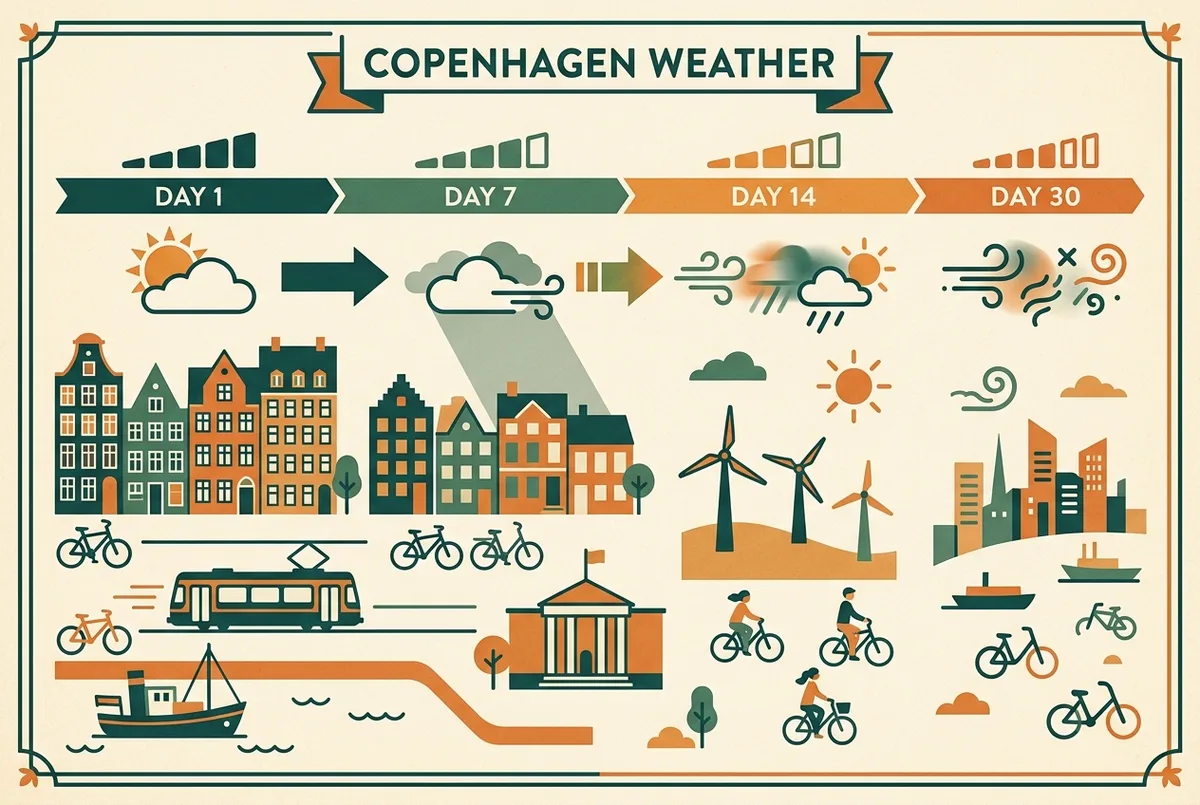
The first five to seven days are usually close to what actually happens, especially for temperature, while rain timing on the later days shifts around more than people expect. I would trust days one through five with real confidence, and treat days six through ten as a rough shape of the week rather than an exact schedule, since Copenhagen’s coastal position makes precipitation timing the hardest thing to pin down that far out.
What Does the 14 Day Weather Forecast Add That the 10 Day Doesn’t?
Not a lot of extra precision, honestly. A 14 day weather Copenhagen forecast mostly extends the same modeling further out, and the last three or four days of it carry a wide margin of error. I would use the 14 day view for a general sense of the pattern, warmer or cooler than average, wetter or drier, rather than expecting it to nail a specific day’s conditions two weeks from now.
Can You Trust a 30 Day Forecast for Copenhagen?
Not in the way most travelers hope to. A 30 day forecast is really a seasonal trend estimate dressed up as a daily outlook, and by day fifteen or so the day-specific numbers stop meaning much. I would use a 30 day forecast only to decide what to pack in general, layers versus a heavy coat, not to plan a specific afternoon around a specific temperature reading that far out.
What Is Copenhagen’s Weather Like Today?
Copenhagen’s current conditions shift within the same day more than a lot of destinations, sun and cloud trading places within an hour or two even on a calendar-normal day. I would check the live strip on this page rather than a screenshot from this morning, since a forecast for copenhagen weather today can genuinely change by the time you actually head out the door.
How Often Should You Check the Forecast Before Your Trip?
Roughly once a week until you are inside the ten day window, then daily once you are within it. I would not obsess over the forecast a month out, checking weekly keeps you informed of the general trend without the stress of watching numbers that are still going to move around. Once you land inside ten days, a daily glance at current weather in Copenhagen actually starts paying off.
Does Copenhagen Weather Change Hour to Hour?
Yes, more than most cities at this latitude. An hourly forecast for Copenhagen often shows real swings across a single afternoon, a clear morning giving way to a passing shower by early evening and clearing again before dinner. I would check hourly conditions on the actual travel day, especially if you are deciding between an early or late canal tour departure, rather than relying on the general daily summary alone.
What Should You Do If the Forecast Looks Bad for Your Boat Tour Day?
Do not cancel automatically. Most Copenhagen canal boats run covered or partly enclosed, so a forecast showing light rain or clouds rarely means the tour gets scrapped, it just changes how much of the ride you spend under cover. I would only rebook around genuinely severe wind or storm warnings, not a routine gray sky, since a normal overcast Copenhagen day still makes for a good harbor cruise. My full canal tour guide covers what a standard sightseeing cruise includes regardless of the sky.
How Does Wind Factor Into a Short-Range Copenhagen Forecast?
Wind matters more than the temperature number for how a day actually feels here, particularly out on open water where nothing blocks the breeze. I would check wind speed alongside temperature, not instead of it, since a mild ten degree day with strong wind off the harbor can feel considerably colder than the forecast temperature suggests on its own.
Is There a Difference Between Copenhagen City Forecasts and Harbor Conditions?
A small but real one. Open water tends to run a touch cooler and windier than the sheltered streets a few blocks inland, so a forecast pulled for central Copenhagen can undersell what the harbor actually feels like. I would pack one extra layer specifically for time on the water, even when the general city forecast looks mild, since the exposed deck of a boat rarely matches the comfort of a walk through town.
What’s the Best Way to Check Copenhagen Weather While Traveling?
A phone weather app updated that morning, plus a quick glance at the live conditions strip on this page if your plans are same-day. I would avoid screenshotting a forecast the night before and treating it as fixed, Copenhagen’s weather moves fast enough that a same-day check is worth the thirty seconds it takes, especially before heading out for anything outdoors.
Should You Rebook a Canal Tour Around the Forecast?
Only in specific cases. A light shower or overcast sky is not worth rearranging plans for, since covered boats handle both without much fuss. I would only shift a booking for genuinely strong wind, thunderstorms, or a named storm system, and even then most operators offer a straightforward reschedule rather than forcing you to eat the cost of a cancelled trip.
How Does the Forecast Change by Season?
Forecast reliability itself does not change much by season, but what the forecast is telling you does. Summer forecasts mostly hinge on rain timing around otherwise warm, stable air, while winter forecasts carry more day-to-day temperature swings and a real chance of an early dark evening shifting your plans. I would read a winter forecast a little more cautiously than a summer one, the range of what could happen on any given winter day is simply wider. My Copenhagen in winter guide covers what an off-season trip actually feels like once you are on the ground.
What Mistakes Do Travelers Make Reading a Copenhagen Forecast?
The most common one is treating a 30 day forecast as a promise instead of a rough trend, then feeling blindsided when day twenty two looks nothing like the app said two weeks earlier. A close second is ignoring wind speed entirely and packing only for the temperature number. I would read the near-term days for specifics and the far-out days for a general shape only, and always factor wind in alongside temperature, that combination avoids both mistakes at once.
Does It Matter Which Weather App or Site You Check?
A little, though less than most travelers assume. Different forecast providers pull from broadly similar underlying models, so the temperature numbers rarely differ by much, the real variation shows up in how each one presents rain probability and timing. I would pick one source and stick with it for the days leading up to your trip, jumping between three different apps hoping for a more favorable answer usually just adds confusion rather than a clearer picture of what to expect.
What Time of Day Is a Forecast Usually Updated?
Most services refresh their short-range numbers several times a day, with the early morning update generally the most useful one for planning that day’s activities. I would check the forecast again in the morning rather than trusting a check from the night before, overnight updates often adjust the rain timing enough to matter if you are deciding between a morning or afternoon canal tour departure.
Is It Worth Booking a Canal Tour Based on a Good Forecast?
Yes, if your dates are flexible enough to take advantage of it. A stretch of clear, calm days is genuinely worth grabbing for an open-deck summer sailing or a golden hour evening cruise. I would book a day or two ahead once the short-range forecast firms up, rather than locking in a date a month out and hoping the weather cooperates, since the near-term forecast is simply the more trustworthy one to plan around. My best time for a canal tour guide breaks down exactly how time of day and season shift the ideal slot.
My Verdict: How Far Ahead Should You Actually Plan Around Copenhagen’s Weather?
My honest read is that anything past ten days is a general guide, not a plan. I would build my itinerary around typical seasonal patterns using my Copenhagen weather by month guide, then switch to the actual forecast, hourly if needed, once I am within about a week of travel. That combination gets you the best of both, realistic expectations early and an accurate picture once it actually matters.
Frequently Asked Questions
How accurate is a 10 day weather forecast for Copenhagen?
Days one through five are generally reliable, days six through ten give a rough shape of the week rather than exact daily conditions.
Is a 30 day forecast for Copenhagen worth checking?
Only as a general trend guide, treat it for packing decisions rather than planning a specific day’s activities around it.
What is the best way to check Copenhagen weather while traveling?
A same-day check on your phone plus the live conditions strip on this page, rather than relying on a forecast checked the night before.
Should bad weather stop you from booking a canal tour?
Usually not, most boats run covered through light rain or overcast skies, I would only rebook around strong wind or storm warnings.
According to the Danish Meteorological Institute, Denmark’s official weather service, short-range forecasts across the country carry noticeably tighter margins of error than anything beyond about two weeks out, which lines up with how I would treat any Copenhagen outlook. Whatever the app says for your dates, a copenhagen boat tour works in most conditions short of a real storm, so check the live numbers close to your trip and pick a departure that matches what you actually get. Browse current sailing options on the homepage once your dates are set.