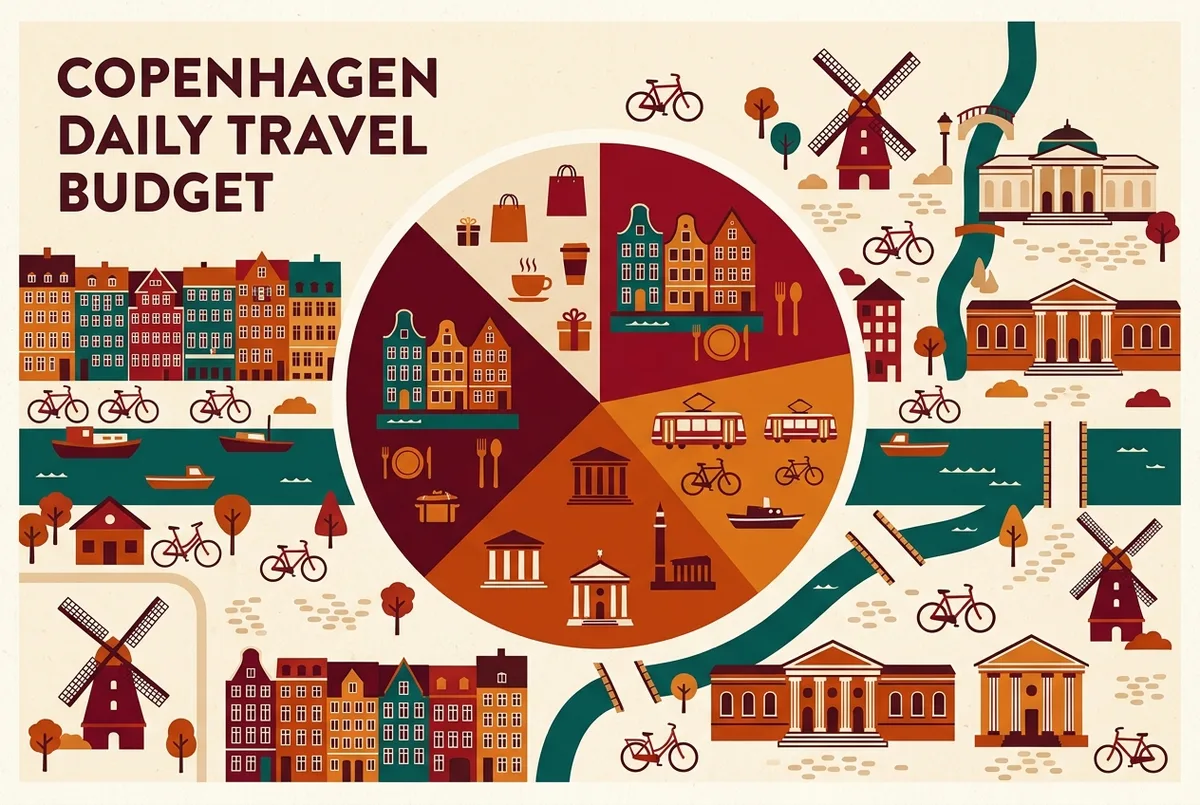
Copenhagen cost per day is one of those numbers that swings wildly depending on how you eat and get around, but for a realistic single day covering food, transport and one paid attraction, I would plan on roughly 600 to 900 DKK per person. Here is what I would actually budget: cook or grab quick lunch rather than sit-down every meal, buy a zone ticket instead of individual fares, and treat one paid attraction, not five, as the day’s real spend.
Is Copenhagen Expensive?
Yes, honestly. Copenhagen consistently ranks among the pricier cities in Europe, driven mostly by food and drink prices rather than transport, which is actually reasonable by comparison, a pattern Visit Copenhagen, the city’s official tourism board, also flags when it comes to trip planning. I would go in expecting Nordic prices rather than Southern European ones, since underestimating this is the single biggest source of budget surprise I see from first-time visitors. Is copenhagen expensive enough to skip? No, but it rewards planning your meals more than most cities do.
Check prices & dates
Ready to visit?
Book your tickets in advance: popular time slots sell out.
A meal in Copenhagen costs anywhere from 60 to 400 DKK per person, depending on whether you grab a bakery lunch or sit down for dinner. A packed lunch or a bakery stop runs 60 to 100 DKK, a casual sit-down lunch closer to 150, and a proper dinner out easily hits 250 to 400 DKK per person once you add a drink. I would eat one real sit-down meal a day and keep the other light, since stacking two restaurant meals is where a Copenhagen budget quietly runs away from people. My where to eat near Nyhavn guide splits the budget picks from the sit-down spots so you know which meal is worth spending on.
What Does Transport Cost for a Day?
A single zone ticket runs a few dozen DKK, but a day pass covering the central zones is the better value the moment you plan more than two or three trips, usually landing around 90 to 100 DKK. I would buy the day pass the moment my plan includes more than a couple of metro or bus rides, since paying per trip adds up faster than people expect in a city built around hopping between neighborhoods.
How Much Should You Budget for One Attraction?
Most single paid attractions in Copenhagen, a museum entry or a canal cruise, land somewhere between 100 and 250 DKK per person, with the classic boat tours sitting toward the lower end of that range. I would pick one paid attraction per day rather than stacking three, since the real cost trap in Copenhagen is not any single ticket, it is buying five of them in one afternoon out of fear of missing something. If a boat trip is your one paid pick, my breakdown of Copenhagen canal tour prices compares the classic, electric and private options.
Does the Copenhagen Card Actually Save Money?
For a busy sightseeing day, often yes, since it bundles free public transport with entry to a long list of museums and attractions, several of which alone can cost close to what the card does. I would only buy it on a day I planned to hit at least two or three paid attractions, since on a lighter day, paying separately usually works out cheaper. My is the Copenhagen Card worth it page runs the actual break-even math rather than a rough guess.
How Much Extra Should You Set Aside for Drinks and Snacks?
Coffee runs 35 to 50 DKK, a beer at a normal bar 55 to 75, and this adds up fast if you are stopping often through the day. I would budget a fixed daily amount for drinks and snacks up front, maybe 100 to 150 DKK, rather than let it become an untracked leak, since these small purchases are usually what pushes a well-planned day over its intended total. If your evening leans toward bars rather than an early night, my Copenhagen nightlife guide has more realistic drink pricing for later in the evening.
Is It Cheaper to Cook Your Own Meals?
If your accommodation has a kitchen, yes, noticeably. A supermarket dinner for two can cost less than one restaurant starter, which matters if you are stretching a longer trip. I would only bother cooking if I am staying more than two or three nights, since for a short city break the convenience of eating out usually outweighs the modest savings from grocery shopping and cooking in an unfamiliar kitchen. For a single day trip, I would not plan around cooking at all.
What Does a Realistic Full Day Add Up To?
Putting it together: 200 to 300 DKK for food, 90 to 100 for a day transport pass, 100 to 250 for one attraction, and 100 to 150 for drinks and extras lands you around 600 to 900 DKK for a full, comfortable day. I would round up to the higher end when budgeting rather than the lower, since Copenhagen prices creep upward more often than they undershoot an estimate. My Copenhagen itinerary guide walks through exactly how to spend that day once the budget is set, with the canal tour anchoring the morning.
How Much Does Accommodation Add to a Daily Budget?
This is usually the single biggest line item, and it varies enormously depending on whether you book a hostel bed, a mid-range hotel or something nicer, with central Copenhagen commanding a real premium over the outer neighborhoods. I would look at accommodation slightly outside the absolute center, near a metro stop, before accepting a downtown premium, since the time savings from staying central rarely outweigh the price gap once a good metro connection is in the mix. This single decision usually moves a daily budget more than food, transport and attractions combined, and it is a genuinely comfortable trade, my is Copenhagen safe guide covers why staying a few stops out is not a safety compromise in this city.
Is Copenhagen Cheaper Outside the Summer Season?
Yes, noticeably. Accommodation prices in particular drop outside the peak June to August window, and the city feels less crowded at the same attractions, which is a nice side benefit on top of the savings. I would seriously consider a shoulder-season trip, spring or early autumn, if budget is a real concern, since the daily cost of food and transport barely changes with the season, but accommodation and flights often do.
How Does Group Size Change the Daily Cost?
Traveling as a couple or a family changes the math meaningfully, since accommodation and some attraction tickets get cheaper per person the more people you split them across, while food costs scale up almost linearly with each additional adult. I would budget per person for food and drinks but calculate accommodation and transport passes as a shared group cost, since treating everything as a flat per-person number overstates what a family or couple actually spends once the fixed costs are divided. Kids also often get reduced or free entry to attractions, which quietly lowers the average cost per person for a family day out.
Are There Free Things to Do That Offset the Cost?
Yes, genuinely more than most visitors expect. Walking the city center, several church interiors, many public parks, and simply riding the harbor bus as functional transport all cost nothing beyond a normal transit ticket, and Copenhagen’s compact layout makes a free walking day surprisingly satisfying. I would build at least one largely free day into a longer trip, since alternating a paid-attraction day with a walking-and-parks day keeps the overall trip average well under the 600 to 900 DKK daily estimate. This is also a good way to recover budget if one day runs over because of an extra meal out or an unplanned purchase.
Does Currency Exchange Affect Your Daily Budget?
Denmark uses the Danish krone rather than the euro, which occasionally surprises visitors coming from elsewhere in the EU who expect euro pricing at the border. I would pay in DKK rather than let a card default to your home currency at checkout, since dynamic currency conversion at the point of sale usually applies a worse exchange rate than your bank would give you automatically. Most cards work fine across Copenhagen without extra fees, but it is worth checking your specific card’s foreign transaction policy before the trip rather than discovering it on the first purchase.
Frequently Asked Questions
Is Copenhagen more expensive than other European capitals?
Generally yes, particularly for food and drink, though transport costs are reasonable by comparison.
How much should I budget for a weekend trip to Copenhagen?
Multiply a single day’s 600 to 900 DKK estimate by your number of days, then add a bit extra for one nicer dinner.
Does tipping affect the Copenhagen daily budget?
Not much, service is typically included in restaurant prices, so tipping is optional and usually small if given at all.
Is public transport included in Copenhagen’s high cost of living?
No, transport is actually one of the more reasonable costs in the city compared to food and accommodation.
Can you visit Copenhagen cheaply?
Yes, with a packed lunch, a day transport pass and one paid attraction, a comfortable day is achievable without overspending.
If you are working with a set daily budget, book a Copenhagen boat tour as your one fixed attraction cost and build the rest of the day around it.